By Dr. Richard Bottiglione, Board-Certified Dermatologist and Founder of Dermatologist’s Choice
After 50 years of practicing dermatology, I’ve watched skincare become increasingly complicated. Consumers are presented with long ingredient lists, elaborate routines, and a different product for nearly every part of the body.
When it comes to moisturizing your skin, I prefer to keep the goal simple: a moisturizer should help keep water in the skin, support the skin barrier, and make the skin feel comfortable without interfering with the treatments that are actually addressing your skin concerns.
So, what should you look for in a face moisturizer? Do you need a special moisturizer for dry skin? Can you put body cream on your face? And do you really need separate morning and nighttime moisturizers?
Here is how I approach these questions as a dermatologist.
1. What Should You Look for—and Avoid—in a Face Moisturizer?
The primary job of a moisturizer is exactly what the name suggests: to moisturize the skin.
I recommend looking for a good face moisturizer formula that help support the skin barrier and reduce moisture loss. Ingredients commonly used for this purpose include ceramides, glycerin, hyaluronic acid, petrolatum, and other emollient or occlusive ingredients. Find these ingredients and more in the Dermatologist's Choice Ultimate Restorative Face Moisturizer.
But more ingredients do not necessarily make a moisturizer better.
One mistake I see in modern skincare is trying to make every product in the routine perform every job. Your cleanser cleanses. Your treatment products can address concerns such as acne, uneven texture, discoloration, and signs of aging. Your moisturizer can simply moisturize.
This becomes particularly important if you use active ingredients such as glycolic acid, TCA, or prescription tretinoin. These treatments can cause temporary dryness, flaking, or irritation as the skin adjusts and rejuvenates.
A good moisturizer can make an effective treatment routine much easier to tolerate. Plus, it can help minimize peeling after a chemical peel treatment.
What should you avoid in a face moisturizer?
There isn't one ingredient that everyone needs to avoid. Skin is individual.
However, I generally recommend being cautious about unnecessarily complicated formulas, particularly if you have sensitive or easily irritated skin. Fragrance and certain botanical ingredients, for example, can be irritating for some people.
If a moisturizer consistently causes burning, itching, swelling, or a rash, stop using it. That is different from the temporary tingling you may experience from an intentionally acidic treatment product or cream such as the Dermatologist's Choice Facial Enhancement Cream or Ultra Anti-Aging Cream. A thick moisturizer is nice to soothe the skin after active ingredients like non-neutralized glycolic acid or TCA.
2. What Type of Moisturizer Do Dermatologists Recommend for Dry Skin on the Face?
For genuinely dry facial skin, I generally prefer a cream over a very lightweight lotion. Applying Vaseline over the cream can also be very helpful for extremely dry skin.
Why?
Creams tend to provide more substantial moisturization and can help reduce water loss from the skin. If your skin feels tight, rough, flaky, or uncomfortable, a richer moisturizer may provide more relief than a thin lotion.
At Dermatologist’s Choice, we developed the Ultimate Restorative Hydrating Complex as a rich, oil-free moisturizer containing ingredients such as ceramides, niacinamide, and vitamin E.
I particularly like having a straightforward moisturizer available when someone is using glycolic acid or TCA. The treatment and the moisturizer have two separate jobs:
the acid treatment encourages exfoliation and skin renewal, while the moisturizer helps keep the skin comfortable and hydrated.
This is especially useful during the peeling or dry phase that can occur after stronger acid treatments such as glycolic acid or TCA chemical peels.
If your skin becomes dry, you don't necessarily need to abandon an effective skincare ingredient. Depending on the degree of irritation, you may need to reduce treatment frequency temporarily and increase moisturization while your skin recovers.
Seeing bumps and irritation after glycolic or TCA application, read this here.
3. Can You Use Body Cream on Your Face?
Yes, in many cases you can. For those with dry skin can benefit from the Pre Bath Oil in addition to moisturizer or lotion.
There is no universal dermatology rule that says a moisturizer labeled "body" suddenly becomes harmful when it reaches your face.
The real question is whether the formulation works well for your skin.
Body creams are often richer than facial lotions because areas such as the hands, arms, legs, elbows, and feet can become extremely dry. Someone with very dry facial skin may actually appreciate that richness.
However, a heavy body cream may feel too occlusive or greasy for someone with naturally oily facial skin. Fragranced body products may also be irritating around the face, particularly for sensitive skin.
So rather than focusing entirely on the words "face" or "body" on the package, look at how your skin responds to the formulation.
If it moisturizes your skin without causing irritation or other problems, it may be perfectly reasonable to use it.
4. Should You Use Different Lotions in the Morning and at Night?
You can, but you don't necessarily need to.
Skincare companies often make routines more complicated than they have to be.
If you have a moisturizer that works well for your skin, there is generally no reason you cannot use it both morning and night.
What may change is everything around the moisturizer.
A Simple Morning Routine
In the morning, I generally recommend keeping things straightforward:
- Cleanse as needed.
- Apply your treatment products if appropriate.
- Moisturize if your skin needs it.
- Apply broad-spectrum sunscreen.
Sunscreen is particularly important if you are treating discoloration, sun damage, or using exfoliating acids.
A Simple Nighttime Routine
Night is often when patients use stronger treatment products.
For example, someone using a glycolic acid treatment such as our Facial Enhancement Cream or stronger Ultra Anti-Aging Cream may apply the treatment at night and add a plain moisturizer as needed for comfort.
The important distinction is this:
You don't necessarily need a "night moisturizer." You need the right moisturizer for what your skin needs that night.
If your skin is comfortable, you may need very little. If it is dry or peeling, use more.
Does Oily Skin Still Need Moisturizer?
Sometimes—but not always. If you have oily skin and prone to breakouts an oil-free moisturizer like the Dermatologist's Choice Ultimate Restorative Face Moisturizer is the best choice.
Another misconception is that every person needs to apply a heavy moisturizer twice a day.
Your skin produces its own oils. If your skin feels comfortable and adequately hydrated, you may not need a heavy moisturizing cream at every step of your routine.
On the other hand, oily skin can still become temporarily dry or irritated from acne treatments, glycolic acid, TCA, tretinoin, weather, or excessive cleansing. In that situation, a moisturizer can be very helpful.
Treat the skin you have rather than following a routine simply because someone told you that everyone needs the same steps.
Moisturizer vs. Treatment: Know the Difference
This is one of the most important lessons I can give patients about skincare.
Moisturizing and treating the skin are not the same thing.
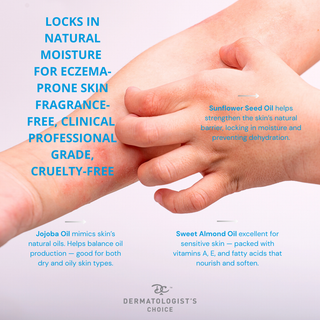
If your primary concern is dryness, moisturize. Skin with irritation or eczema can benefit from oil more than moisturizers such as the Pre-Bath Oil.
Treating the skin to help reduce wrinkles and age spots needs an active ingredient like non-neutralized glycolic acid or TCA. Most moisturizers don't have the active ingredient to treat the skin concern so they simple just moisturize the skin.
If your concerns include acne, rough texture, clogged pores, uneven pigmentation, sun damage, or visible signs of aging, a moisturizer alone may not address the underlying concern. That's where appropriately selected active ingredients can become important.
For decades in my dermatology practice, I have relied on ingredients such as glycolic acid and TCA because they exfoliate the surface of the skin and can be incorporated into treatment plans for a variety of common cosmetic skin concerns.
Then we moisturize according to what the skin needs.
That philosophy is at the heart of Dermatologist’s Choice: effective treatment doesn't have to mean a complicated routine.
Dr. B's Bottom Line
After 50 years in dermatology, my advice about moisturizers remains simple:
Choose a moisturizer based on what your skin needs—not marketing terminology.
For dry skin, a richer cream may be more helpful than a lightweight lotion. A body cream isn't automatically inappropriate for the face. You don't necessarily need separate day and night moisturizers. And your moisturizer doesn't need a long list of trendy ingredients to do its job.
Most importantly, understand the difference between moisturizing your skin and treating your skin.
Use effective treatments for the concerns you want to improve. Use moisturizer to support your skin and keep it comfortable. And use sunscreen during the day to help protect the progress you're making.
Dr. Richard Bottiglione is a board-certified dermatologist and the founder of Dermatologist’s Choice Skincare. With approximately 50 years of experience practicing dermatology, Dr. B developed Dermatologist’s Choice around a straightforward philosophy: use proven active ingredients at effective concentrations and keep skincare simple. Learn more about Dr. Bottiglione and Dermatologist's Choice on Instagram here.